
Waterford Township City Directory Collections
Waterford has no located standalone city-directory run. The strongest local evidence sits in regional Pontiac and North Oakland volumes, plus county officer directories and library companion sources. That distinction matters. A book may be valuable for a Waterford Township family, yet still omit a particular address or use a different community label. The Oakland County Pioneer and Historical Society shelf list supplies the clearest inventory of titles and years. Start with a likely volume, then confirm the geographic scope inside the book before treating it as coverage for a township household.
| Collection | Years | Where Held | Access |
|---|---|---|---|
| Pontiac-Flint City Directory, Loomis & Talbotts | 1860-61 | Oakland History Center shelf list | Regional title; check the volume for Waterford inclusion. |
| Pontiac directories | 1907, 1912, 1915 | Oakland History Center | Compare alphabetical listings with census and deed evidence. |
| Polk's Pontiac | 1922, 1925, 1928, 1950, 1952-54, 1956-57, 1960, 1962 | Oakland History Center; library or online copies may exist | Use surname, street, telephone, classified, and household entries where present. |
| Arrow Street Guide and Pontiac telephone book | 1930; 1931 | Oakland History Center | Street orientation or subscriber evidence; non-subscribers can be absent. |
| North Oakland Criss-Cross | 1957, 1958, 1960 | Oakland History Center | Address-to-head-of-household route. |
| Bresser's South Oakland Cross-Index | 1967-68 | Oakland History Center | Street, household, telephone, and occupancy-style fields vary by volume. |
| Pontiac and North Oakland criss-cross | 1972-83, except 1974-75 | Library of Congress guide; local holdings need confirmation | Regional reverse directory with an explicit two-year gap. |
The 1962 Polk's Home Directory is especially worth checking because its shelf description calls it a complete resident and business index and names several North Oakland communities. That language does not establish Waterford coverage. The regional source should be opened and tested with a known township street or surname. Similarly, an officer directory can identify civic office holders but is not a household roll. Note: A missing entry may reflect the book's geography, publication rules, or an unlisted household rather than a move.
Waterford Township Directory Coverage Is Regional
Regional titles are a local quirk, not a defect. Waterford Township developed around community names including Clintonville, Waterford Village, Drayton Plains, and Windiate Park. Pontiac-area books may use one of those names, a postal label, or a broader North Oakland heading. Search each reasonable label before deciding that a person is absent. The township is legally the Charter Township of Waterford, even though its current directory identity uses Waterford Township for continuity.
Use a directory as dated evidence of what the publisher recorded, not as a full count of every person at an address. Telephone directories reach subscribers. Reverse books often foreground the head of household. Alphabetical books can have omissions, spelling changes, and abbreviations. A name match gains weight when the address, family relationship, or another dated source lines up. The later Waterford Township streets record path is better suited to a modern parcel or a current address after the historic street has been identified.
Waterford Township Directory Volume Years
The known holdings form a broken, useful timeline rather than an annual sequence. It begins with the 1860-61 Pontiac-Flint volume, moves through selected Pontiac books before the First World War, and then has Polk, street-guide, phone, and reverse-directory eras. The gaps belong in the research notes. In particular, the Library of Congress catalog identifies Pontiac and North Oakland criss-cross volumes for 1972 through 1983 but shows 1974 and 1975 as missing.
- 1860-61: Pontiac-Flint City Directory gives the earliest listed regional title.
- 1907-31: Pontiac volumes, the 1919 rural-route directory, the 1930 Arrow guide, and the 1931 telephone directory add different forms of name and address evidence.
- 1950-68: Polk's Pontiac, North Oakland Criss-Cross, and Bresser's Cross-Index make address-first work more practical.
- 1972-83: Pontiac and North Oakland criss-cross titles continue the reverse-directory path, with 1974-75 unaccounted for in the catalog.
See the digitized Pontiac City Directories catalog for a record of available volume metadata and related titles.
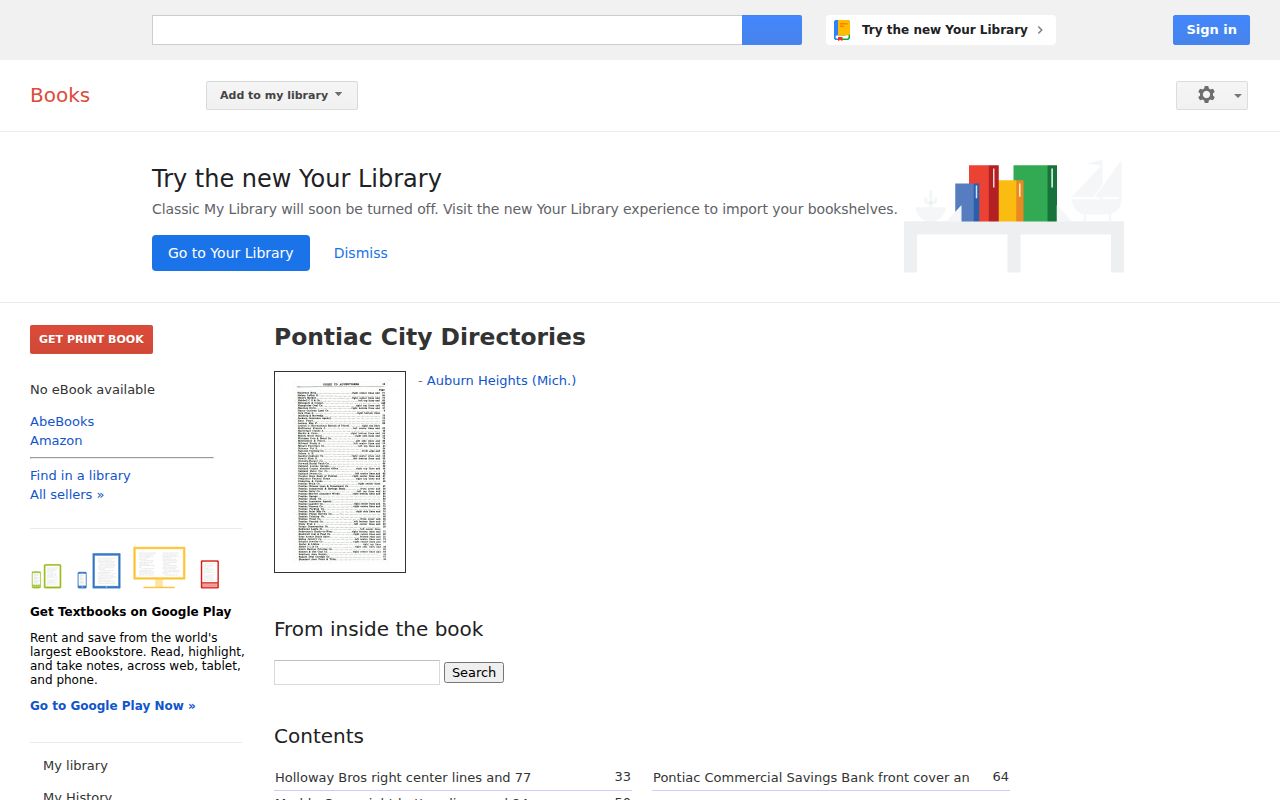
Catalog visibility can establish a title, publisher, or year, but a readable Waterford Township address line was not exposed in the inspected snippet. Use an authorized full-view copy or a library volume to inspect the actual entry.
Waterford Township Directory Shelves and Access
The access chain is broader than one catalog. The Oakland History Center shelf list identifies the regional directory titles. The Library of Michigan city-directory guide places print directories on its second-floor South and rare-books room, microfilm and fiche in the second-floor South Microfilm Room, and directs researchers to the ANSWER catalog using a city-plus-directory search. Its guide also identifies in-library access paths through Ancestry Library Edition or HeritageQuest.
Waterford Public Library's genealogy resources add local maps, obituary and death-notice leads, cemetery references, yearbooks, databases, and referrals to area collections. Authentication can vary by resource. The Waterford Historical Society, Oakland History Center, Detroit Public Library Burton collection, Library of Michigan, Archives of Michigan, and FamilySearch catalogs are complementary sources rather than interchangeable copies of the same record.
Review the Oakland History Center directory shelves before a visit so the requested year and format are clear.
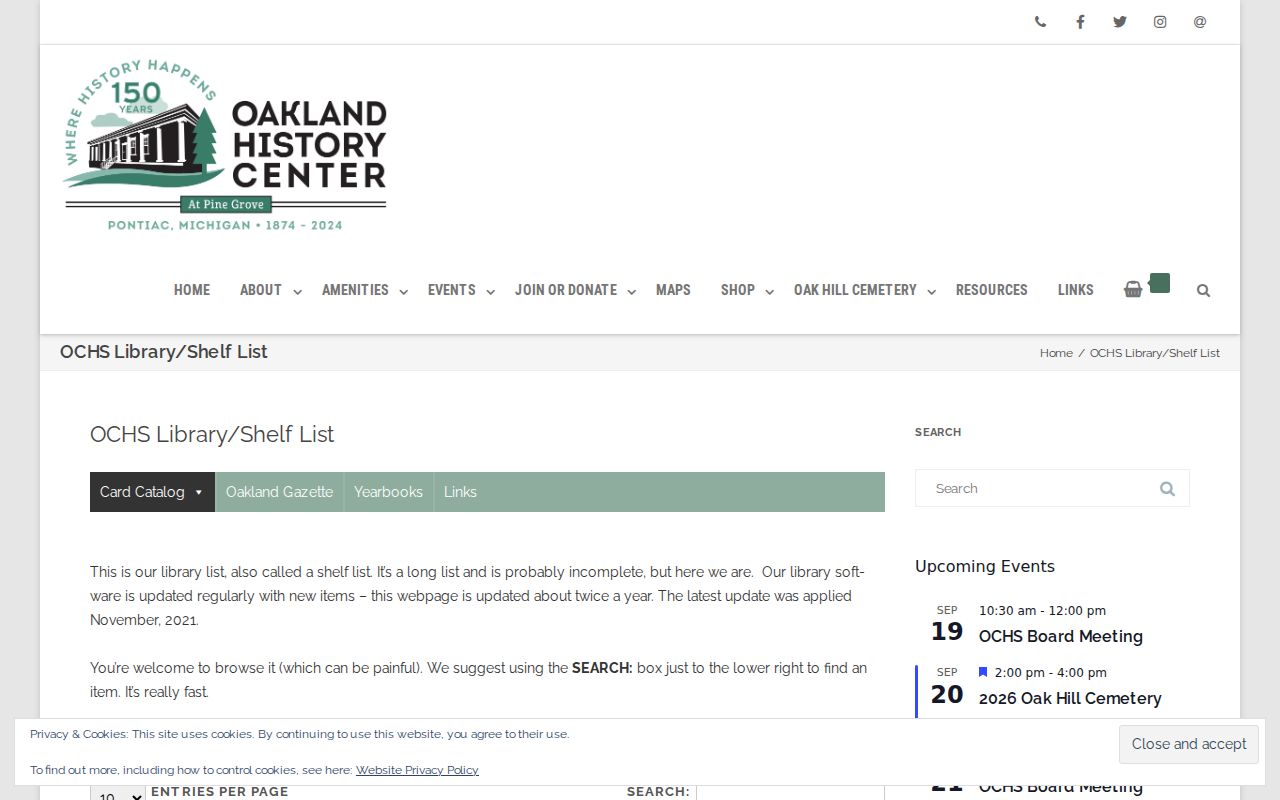
The shelf list is a holdings inventory. It helps locate a volume, but its presence does not prove that every Waterford Township household is included in that volume.
Reading Waterford Township Directory Entries
Read the whole line before recording a conclusion. The Library of Michigan guide describes a field model that can include surname and given name, spouse or household relationship, occupation or business affiliation, street address, telephone number, owner or occupancy notation, widow or household-status notation, and directory-specific abbreviations. Polk books can add surname, street, phone, and classified categories. Bresser and criss-cross books can add a head of household, year first listed, new-arrival or relocation marks, building information, or phone material. The exact combination changes by title.
| Name and relationship | Copy spelling, initials, and any spouse or household notation exactly as printed. |
|---|---|
| Occupation or affiliation | Record it as a dated identifier, not as proof of a later status. |
| Street address | Preserve the number, directional, suffix, and abbreviation for map comparison. |
| Telephone and listing marks | Note any telephone, owner or occupancy mark, first-listing notation, or widow notation. |
| Street or classified index | Use it to locate the address or business context when the volume supplies one. |
- Criss-cross directory
- A reverse directory arranged by street and number so an address can lead to a listed household or telephone entry.
- Householder index
- An index that centers the listed head of a household. It may not name every person at that address.
- Abbreviation key
- The volume's own guide to its marks, usually in front matter. Photograph or transcribe it before expanding a symbol.
Do not guess at an abbreviation. The key in one book may not apply to another publisher or year. Note: An entry is strongest when its address and date are checked against an independent historical source.
Waterford Township Criss-Cross Directory Years
Criss-cross and cross-index books reverse the usual name-first approach. Begin with the street, find the house number, copy the listed name and every mark, and then return to the alphabetic portion for spelling and family context. Oakland History Center lists North Oakland Criss-Cross editions for 1957, 1958, and 1960, followed by Bresser's South Oakland Cross-Index for 1967-68. The later Pontiac and North Oakland run is cataloged for 1972-83, except the known 1974-75 gap.
The Library of Michigan guide explains why those books can include street, head-of-household, telephone, owner or occupancy status, first-listed year, relocation, and building details.
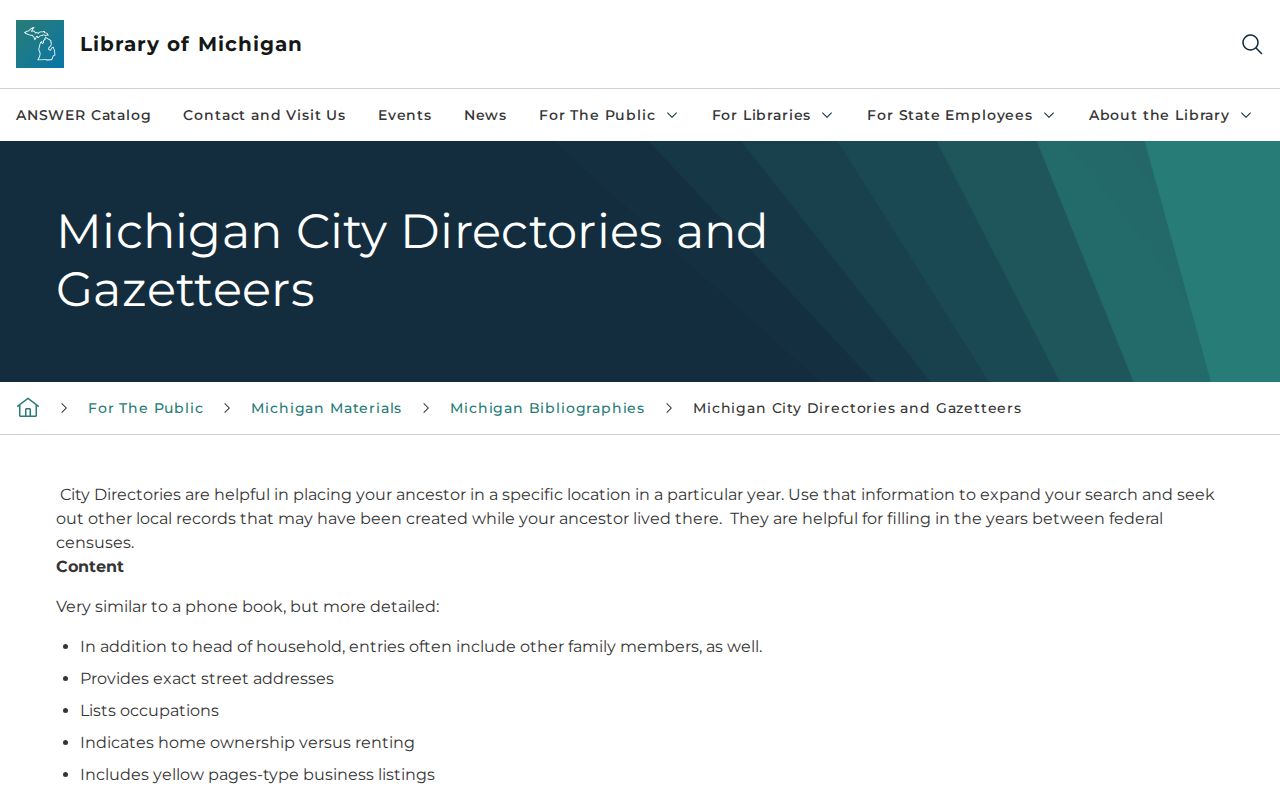
These fields make a reverse directory a good historical address tool, but they do not convert the book into a complete list of every resident at a street address.
Tracing Waterford Township Directory Households
Build a dated trail from one confirmed address and year. Directories are most useful between census releases, not as a substitute for the census. Federal census data through 1950 is public under the 72-year release rule. Pair an entry with the nearest census, then use deeds, obituaries, probate, cemetery records, and historical maps to test whether the same household remained in place, moved, or changed form.
- Start with a known year and address, then use the street index or criss-cross section to locate the listed household.
- Copy the exact name, relationship notation, address abbreviation, occupation or affiliation, and telephone detail.
- Compare nearby available editions, including the 1919 rural-route, Polk, Arrow, telephone, Bresser, and criss-cross eras where they fit the date.
- Check the closest census for age, birthplace, occupation, and household composition. A directory head is not automatically every resident.
- Confirm ownership through the assessor and recorded deeds, then use obituary, probate, newspaper, or cemetery material to explain a last appearance.
For family-history companions, begin with the Waterford Public Library genealogy and history resources.
The library sources connect names to census, cemetery, obituary, yearbook, and local-history material. A later source can confirm a family link, but should still be matched by date and address.
Waterford Township Directory Place Labels
Waterford's historical geography affects a city-directory search. The township has 34 inland lakes, and records may use Clintonville, Drayton Plains, Waterford Village, Windiate Park, Crescent Lake, or a railroad-station name rather than the modern township wording. Older roads can add another layer: the township timeline says Grand River street later became Maple and then Andersonville Road. Search known variants, preserve the exact printed form, and translate it with maps rather than silently replacing it with a current label.
The Waterford historical maps cover Waterford, Clintonville, Drayton Plains, Village, and township views. They can bridge a directory label to a current parcel, road intersection, or community. This is a comparison of place names, not proof that two similar names identify the same person. Note: A historic road label should be tested with maps, plats, and the dated source before it is tied to a present address.
Waterford Township Directory Companion Sources
A printed directory is only one part of a household record trail. Waterford Public Library identifies nineteenth-century Pontiac newspaper death notices, local biographies, later obituary and death-notice indexes, cemetery material, yearbooks, and database access. Township cemetery search may add a grave location, marker image, obituary, or directions when available. The local historical-society network also points researchers toward Michiganology, Archives of Michigan, Oakland County history resources, maps, aerials, and digitized newspapers.
These sources answer different questions. A census can show a household at a particular enumeration date. A deed can anchor property ownership. An obituary or probate record can identify family relationships. A cemetery entry can document burial. None should be used alone to turn a shared name into a residence conclusion. The practical value comes from the agreement of date, place, address, and relationship across records.